
The Messy Middle
If you’ve ever thought, ‘Who am I to do this?’, this is for you.

I've just had one of those moments of happy serendipity. You know when things unexpectedly align? When every traffic light turns green on your journey, you're first in the queue for coffee, or the rain starts and you find a forgotten umbrella in your bag.
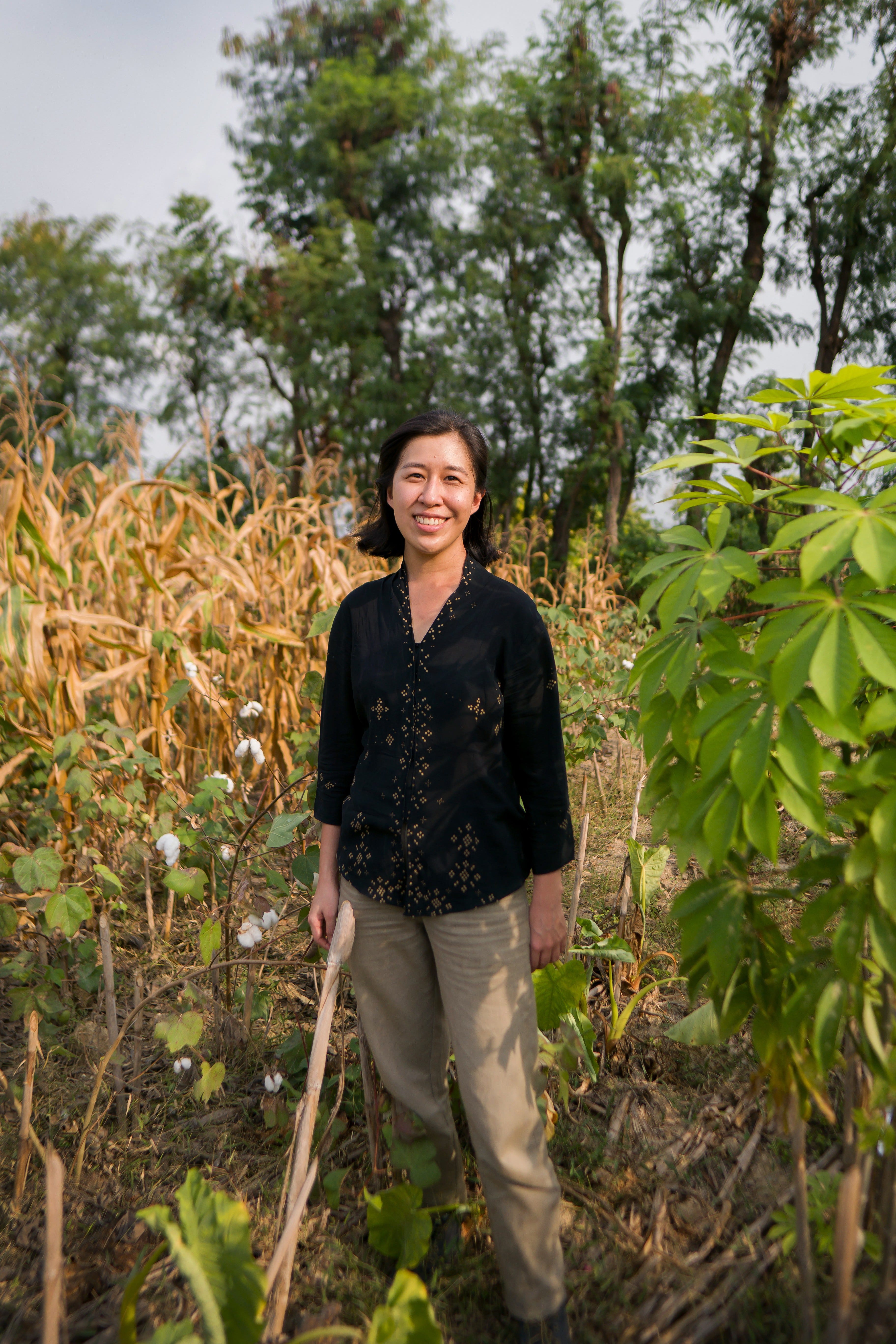
For me, it was arriving at work on Monday morning, braced for emails and the usual post-weekend catch-up, only to start with what I thought would be a routine introductory call. Instead, I found myself in one of those conversations that shifts how you see things. I was meeting with Denica Riadini-Flesch, founder of SukkhaCitta, a slow-fashion brand worn by the likes of Chris Martin and championed in features by National Geographic and Vogue.
A Story Anything But Slow
Talking to Denica, I realised her story is anything but slow. Like many social entrepreneurs I've met, she's packed an incredible amount into just nine years. It made me feel static in comparison, like one of those time-lapse videos where you're standing still and someone else is doing epic work behind you!
Her journey began with a life-changing health incident that pulled her out of her comfort zone and into the world of batik artisans in a remote village in Java. In their efforts to compete with mass-produced fabrics, many had abandoned traditional crops suited to the land and seasons. Instead, they'd been pushed toward cheaper processes and synthetic dyes. Some of the chemicals used were carcinogenic.
Denica wasn't a textile expert or sustainability consultant but she could see what was being lost: ancestral knowledge, environmental resilience, and safe livelihoods. The urgency of that loss stayed with her.
Think about what you're wearing today. Look at the colour. Is that a natural pigment? Where did the runoff from the dyeing process go? Who grew the crop? Who made the clothing? Were they paid fairly?
Those were the questions running through Denica's mind. And from that discomfort, SukkhaCitta was born. The company is a regenerative fashion pioneer, creating beautiful clothing using traditional methods and natural dyes, working directly with artisan communities to preserve ancestral textile techniques. The name, she told me, means happiness.
Three Lessons from the Messy Middle
I've come to realise many of the most impactful people I meet never set out to 'change a system'. They saw something that wasn't right, asked questions no one else would, and ended up in the messy middle of making it better. Listening to Denica, three things stood out, lessons for any of us looking at a problem and wondering if we should step in.
You don't need to be the expert, just willing to see the gap
When she started, Denica wasn't a specialist in regenerative agriculture or fashion supply chains, she was a development economist. But she was willing to ask the awkward questions others were skimming past.
"The biggest delay was starting," she told me. "That voice saying, 'Who am I to do this?'"
If you've ever hesitated because you're not 'qualified', you're not alone. But Denica's background became her superpower. It helped her see the whole system, not just the product but the power dynamics, the land, the people, and the structural choices shaping it all. She describes her work as "sector-agnostic," principles that could just as easily be applied to "making French fries rather than textiles".
The messy middle is where change actually happens
When stories like Denica's get retold, they're often polished into neat success narratives. But she reminded me that change is messy.
"It's a yo-yo between 'I've got this' and failure, every day, sometimes every hour," she said. "Everyone wants to talk about scale and numbers, not the messy middle – where people fear that they don't know enough or aren't doing it right. Those internal blocks are normal, it's part of changing systems, and we need to share that reality."
At the Skoll Centre at Oxford, we work with leaders bridging seemingly impossible divides, bringing together people and systems that often don't naturally connect. What Denica described is exactly what we see everywhere: the daily reality of trying to create change.
Everyone has a role to play
Denica's work is extraordinary, but she's clear: we can't place the burden of fixing broken systems solely on social entrepreneurs or governments.
"Everyone has a role to play," she said. "Industry, policymakers, customers, we all need to contribute."
We need collaboration from across systems and people who look beyond the linear.
Your Messy Middle
So here's what I'm curious about: what does your messy middle look like? (Note: I'm not thinking menopausal middle, although if you happen to have tips on that too, please share).
If you're someone trying to change something, whether it's in your workplace, your community, or a system you've spotted that's broken, tell us about those daily yo-yo moments.
What keeps you going when the voice in your head says "who am I to do this”? What do you do on the days when you feel like a fraud or when it's hard to see progress?
Read more about Denica's incredible work in National Geographic, at SukkhaCitta and rumahsukkhacitta.org